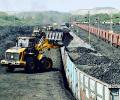
Eleven bidders, including Adani Enterprises, have shown interest in the first-ever coal import tender issued by national miner Coal India (CIL). Recently, state-owned NTPC awarded 6.25 million tonnes (mt) of imported coal tender worth Rs 8,300 crore to Adani Enterprises. CIL, in a public statement on Tuesday, said: "The prominent Indian agencies among them (11 coal importers) were Adani Enterprises, Mohit Minerals, and Chettinad Logistics. "A couple of coal exporting agencies from abroad, including one from Indonesia, have also shown interest," it said.
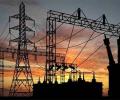
With the cooling down of heatwaves as the monsoon spreads across the country, power demand has fallen by 12.5 per cent from the start of this month till Monday. Peak power demand of the country had touched a record of 210 Gw last week, mostly due to rising temperatures and opening up of the economy. Compared with the beginning of this month, almost all states have seen a fall in power demand. Punjab, however, is an exception where the power demand on Monday was 17 per cent higher than on June 1.

Even as Union ministers allay misgivings over Agnipath, figures show a meagre 2.4 per cent of the ex-servicemen who applied for a government job could get one as the Centre and the states have been unable to recruit against the reserved quotas. Public sector undertakings (PSUs), ministries, and officials of Sainik Boards have blamed it on the lack of skill among ex-servicemen. They say veterans' inability to qualify in selection exams is one of reasons for this. Also, non-recognition of qualifications obtained from the military are reasons why their recruitment has remained significantly low, pushing them towards low-skill jobs.
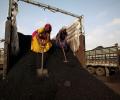
Coal production by Coal India (CIL) has grown slower than the captive mines, awarded over the last six years. During 2020-22, production from the captive mines jumped by 38.5 per cent while CIL saw a tepid growth of 3.4 per cent, according to government data. In terms of dispatch to the power sector, captive mines have raced ahead, witnessing a growth of 72 per cent compared to 15 per cent for CIL. For the current fiscal year, CIL's production is expected to be around 565 million tonnes.

The Union ministry of coal, while acknowledging that domestic coal stock is not enough to meet the power demand, asked state governments and the power generating companies (gencos) to import coal before monsoon season sets in. The ministry has warned the gencos if they do not import coal for 10 per cent blending in their fuel demand by the end of this month, blending benchmark would be increased to 15 per cent. The order pertains to all - central, state and independent power producers (IPPs)/privately owned units.

As the Centre pushes reforms in the power sector, especially for the beleaguered electricity distribution segment, several states, especially those ruled by Opposition parties, are clamouring against it. Maharashtra, West Bengal, Tamil Nadu, and Kerela have voiced their reservations against the proposed amendments to the Electricity Act, 2003. The irony is the states opposing the amendments on the ground of threat of privatisation already have private partnerships in power supply. The proposed Bill was slated to be placed on the floor of Parliament in the Monsoon session. But it still awaits Cabinet approval amid several states complaining that they have been not consulted on the issue.

The Great Indian bustard is at the centre of another impending legal tussle. The government is planning to move the Supreme Court seeking a review of its order that asked Gujarat and Rajasthan to lay transmission lines linked to solar power units underground so as to not pose any threat to the endangered bird. The ministry of new and renewable energy (MNRE) has sought a view from the law ministry and will move the court basing its arguments on estimates showing that the bird's population was declining even before solar power plants came to the region, said a senior government official requesting anonymity.

Energy's exit is a cautionary tale for several foreign investors in India as close to 16 Gw of solar and wind power projects languish without any power purchase agreement, 24 Gw without transmission connectivity and around 2 Gw unilaterally cancelled by project developers.

According to government data, the Centre procured only 35,179 ventilators out of the 50,000 originally ordered.
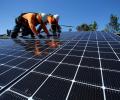
Glass shortage in China and the rising prices of imported glass used in finished solar panels have already hit the cost of solar panel imports. The cost of solar modules imported by India have increased 22 per cent since June last year. India imports close to 90 per cent of its solar cells and modules, of which nearly 80 per cent is from China. Domestic solar equipment makers import glass panels and are the largest suppliers in China. The price of a solar module glass has increased 150 per cent in the past six months, revealed industry estimates.

Foreign investment firms, especially private equity, are jittery about the Indian market as uncertainty continues to shroud the energy sector.

In order to keep the interest of new and small players intact, the coal ministry is offering only small- and medium-sized coal mines in the second round.

This is the first time India is offering coalmines to private companies for commercial sale.

In December 2016, the Supreme Court directed the central government to have a graded action plan to tackle the menace of air pollution. There are two plans - Comprehensive Action Plan and Graded Response Action Plan.

When the Centre tries to encroach upon the subjects that are under the prerogative of the state, or where the centre tries to evade from any responsibility guaranteed to a state through a constitutional provision/obligation, it poses a threat to federalism.
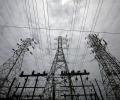
Growth in power demand remains in negative though it is picking up as coronavirus-related restrictions are eased.

Funding challenges are not limited to just one think tank. Several scholars say that access for conducting research and getting foreign funds has become a major hurdle for think tanks, with the government raising many questions regarding such inflows. As a result, many think tanks are keeping a low profile and becoming less prolific.

It bounced back from the historic low of 41 recorded in the April-June quarter, during the initial days of the pandemic and lockdown.

Exim Bank pointed out that recent performance of the manufacturing sector in India is indicative of an underlying inertia.

The background work of creating a suitable digital architecture of a website also remains unfinished as it has been a challenge to shortlist technology partners.
 © 2026 Rediff.com - Investor Information - Advertise with us - Disclaimer - Privacy Policy - Sitemap - Feedback - About us - Terms of use - Grievances